
ZÂMBETUL INIMII - RUGĂCIUNI, BASME, POEZII, GHICITORI ȘI JOCURI PENTRU COPII ISTEȚI CA VOI !
duminică, 19 ianuarie 2020
THERE WAS A LITTLE GIRL - by Henry Wadsworth Longfellow

sâmbătă, 18 ianuarie 2020
ARE MAMA O FETIȚĂ - din folclorul copiilor
marți, 14 ianuarie 2020
THE SNOW MAN - by Hans Christian Andersen
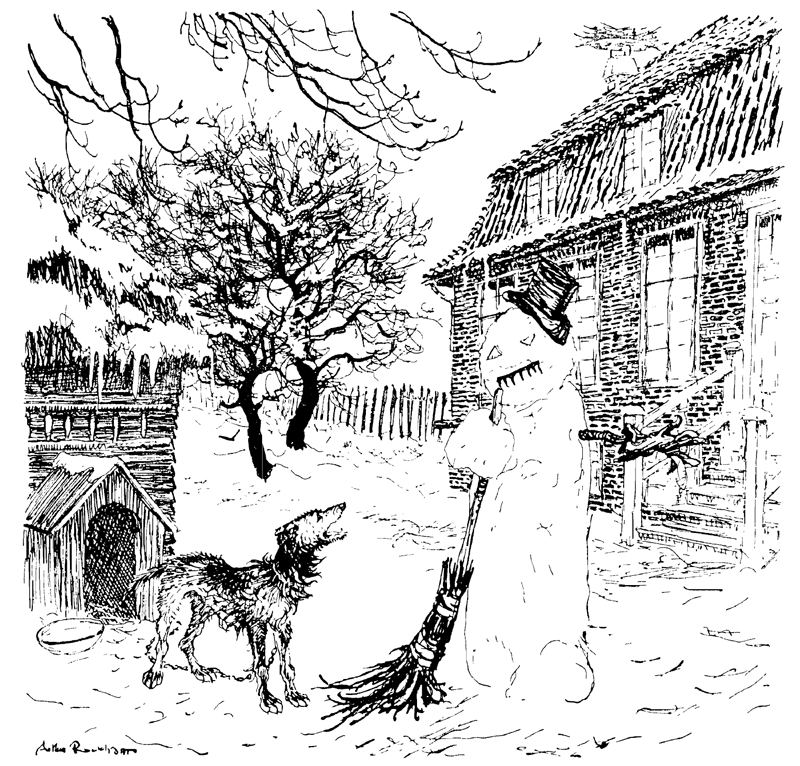
“It is so wonderfully cold that my whole body crackles!” said the Snow Man. “This is a kind of wind that can blow life into one; and how the gleaming one up yonder is staring at me.” That was the sun he meant, which was just about to set. “It shall not make me wink, I shall manage to keep the pieces.”
He had two triangular pieces of tile in his head instead of eyes. His mouth was made of an old rake, and consequently was furnished with teeth.
He had been born amid the joyous shouts of the boys, and welcomed by the sound of sledge bells and the slashing of whips.
The sun went down, and the full moon rose, round, large, clear, and beautiful in the blue air.
“There it comes again from the other side,” said the Snow Man. He intended to say the sun is showing himself again.
“Ah! I have cured him of staring. Now let him hang up there and shine, that I may see myself. If I only knew how I could manage to move from this place, I should like so much to move. If I could, I would slide along yonder on the ice, just as I see the boys slide; but I don’t understand it; I don’t know how to run.”
“Away! away!” barked the old Yard Dog. He was quite hoarse, and could not pronounce the genuine “Bow, wow.” He had got the hoarseness from the time when he was an indoor dog, and lay by the fire. “The sun will teach you to run! I saw that last winter in your predecessor, and before that in his predecessor. Away! away! and away they all go.”
“I don’t understand you, comrade,” said the Snow Man.
“That thing up yonder is to teach me to run?” He meant the moon. “Yes, it comes creeping from the other side.”
“You know nothing at all,” retorted the Yard Dog. “But then you’ve only just been patched up. What you see yonder is the moon, and the one that went before the sun. It will come again to-morrow, and will teach you to run down into the ditch by the wall. We shall soon have a change of weather; I can feel that in my left hind leg, for it pricks and pains me; the weather is going to change.”
“I don’t understand him,” said the Snow Man; “but I have a feeling that he’s talking about something disagreeable. The one who stared so just now, and whom he called the sun, is not my friend. I can feel that.”
“Away! Away!” barked the Yard Dog. “They told me I was a pretty little fellow: then I used to lie in a chair covered with velvet, up in master’s house, and sit in the lap of the mistress of all. They used to kiss my nose, and wipe my paws with an embroidered handkerchief. I was called ‘Ami, dear Ami, sweet Ami .’ But afterward I grew too big for them, and they gave me away to the housekeeper. So I came to live in the basement story. You can look into that from where you are standing, and you can see into the room where I was master; for I was master at the housekeeper’s. It was certainly a smaller place than upstairs, but I was more comfortable and was not continually taken hold of and pulled about by children as I had been. I received just as much good food as ever, and even better. I had my own cushion, and there was a stove, the finest thing in the world at this season. I went under the stove, and could lie down quite beneath it. Ah! I will sometimes dream of that stove. Away! Away!”
“Does a stove look so beautiful?” asked the Snow Man. “Is it at all like me?”
“It’s just the reverse of you. It’s as black as a crow, and has a long neck and a brazen drum. It eats firewood, so that the fire spurts out of its mouth. One must keep at its side or under it, and there one is very comfortable. You can see it through the window from where you stand.”
And the Snow Man looked and saw a bright, polished thing, with a brazen drum, and the fire gleamed from the lower part of it. The Snow Man felt quite strangely; an odd emotion came over him; he knew not what it meant, and could not account for it, but all people who are not men know the feeling.
“And why did you leave her?” asked the Snow Man, for it seemed to him that the stove must be of the female sex.
“How could you quit such a comfortable place?”
“I was obliged,” replied the Yard Dog. “They turned me out of doors, and chained me up here. I had bitten the youngest young master in the leg, because he kicked away the bone I was gnawing. ‘Bone for bone,’ I thought. They took that very much amiss, and from that time I have been fastened to a chain and have lost my voice. Don’t you hear how hoarse I am? Away! away! I can’t talk any more like other dogs. Away! away! That was the end of the affair.”
But the Snow Man was no longer listening at him. He was looking in at the housekeeper’s basement lodging, into the room where the stove stood on its four legs, just the same size as the Snow Man himself.
“What a strange crackling within me!” he said. “Shall I ever get in there? It is an innocent wish, and our innocent wishes are certain to be fulfilled. I must go in there and lean against her, even if I have to break through the window.”
“You’ll never get in there,” said the Yard Dog; “and if you approach the stove you’ll melt away, away!”
“I am as good as gone,” replied the Snow Man. “I think I am breaking up.”
The whole day the Snow Man stood looking in through the window. In the twilight hour the room became still more inviting; from the stove came a mild gleam, not like the sun nor like the moon; it was only as the stove can glow when he has something to eat. When the room door opened the flame started out of his mouth; this was a habit the stove had. The flame fell distinctly on the white face of the Snow Man, and gleamed red upon his bosom.
“I can endure it no longer,” said he. “How beautiful it looks when it stretches out its tongue!”
The night was long; but it did not appear long to the Snow Man, who stood there lost in his own charming reflections, crackling with the cold.
In the morning the window-panes of the basement lodging were covered with ice. They bore the most beautiful ice flowers that any snow man could desire; but they concealed the stove, which he pictured to himself as a lovely female. It crackled and whistled in him and around him; it was just the kind of frosty weather a snow man must thoroughly enjoy.
But he did not enjoy it; and, indeed, how could he enjoy himself when he was stove-sick ?
“That’s a terrible disease for a Snow Man,” said the Yard Dog. “I have suffered from it myself, but I got over it. Away! away!” he barked; and he added, “the weather is going to change.”
And the weather did change; it began to thaw. The warmth increased, and the Snow Man decreased. He made no complaint and that’s an infallible sign.
One morning he broke down. And, behold, where he had stood, something like a broomstick remained sticking up out of the ground. It was the pole around which the boys had built him up.
“Ah! now I can understand why he had such an intense longing,” said the Yard Dog. “Why, there’s a shovel for cleaning out the stove-rake in his body, and that’s what moved within him. Now he has got over that, too. Away, away!”
And soon they had got over the winter.
“Away! away!” barked the hoarse Yard Dog. And nobody thought any more of the Snow Man.
duminică, 12 ianuarie 2020







joi, 9 ianuarie 2020


marți, 7 ianuarie 2020
VIAȚA SFÂNTULUI IOAN BOTEZĂTORUL

Sfântul Prooroc Ioan s-a născut în familia preotului Zaharia, după cele mai multe izvoare de atestare, la Ein-Karem, la aproximativ 10 kilometri de Ierusalim. Nașterea minunată a Sfântului Ioan a fost profețită de Îngerul Gavriil într-o arătare în timpul slujbei oficiate la templu de tatăl Sfântului Ioan.
Mama sa, Elisabeta, înaintată în vârstă și fără copii, era descendentă a seminției lui Aaron.
Zaharia, tatăl său, nu a crezut în cuvântul îngerului și, drept pedeapsă, a rămas mut.
Nașterea lui Ioan s-a petrecut cu șase luni înaintea Nașterii lui Iisus. Sfinții Părinții socotesc nașterea Înaintemergătorului ca 'minunea ce merge înaintea Minunii' și o privesc ca treapta pe care se urcă înțelegerea celor ce vor vedea nașterea cea peste fire, din cea bătrână și stearpă din neamul lui Aaron, pentru a se sui apoi la vederea cea preaminunată a nașterii Celui mai presus de fire din Fecioara Maria.
Sfântul Ioan își începe propovăduirea în pustiu, acolo își botează ucenicii și 'glasul lui striga în pustiu' (Is. 40, 3). Ducea o viață de renunțare, era îmbrăcat cu haine din păr de cămilă, mânca miere de albine și lăcuste și se ruga mereu. A fost un exemplu pentru primii asceți ai creștinismului și pentru monahism. Mesajul principal pe care îl transmitea Ioan era: 'Pocăiți-vă, că s-a apropiat Împărăția cerurilor !' Cei care renunțau la păcate erau botezați în Iordan. Botezul acesta are si o semnificatie eshatologică, prevestind, așa cum însuși proorocul spunea, botezul cu 'foc și Duh Sfânt', pe care îl aducea Cel Care va veni dupa el, Hristos Domnul.
In predicile sale l-a criticat, în mod repetat, pe regele Irod Antipa pentru faptul că s-a căsătorit cu Irodiada, fosta soție a fratelui său vitreg, Filip. Aceasta i-a atras întemnițarea. La o petrecere cu mulți oaspeți, Salomeea, fiica Irodiadei, a dansat în fața tatălui său vitreg, iar Irod Antipa i-a promis orice. La îndemnul mamei, fata a solicitat capul Sfântului Ioan Botezătorul. Fiind ucis, capul i-a fost adus Salomeei pe tavă. Trupul lui Ioan Botezatorul ar fi fost dus de susținătorii săi în orașul Samaria.
Astăzi, capul Sfântului se află la Roma. Fragmente din moaște se găsesc și în Biserica Copta, la mânăstirile dintre Cairo și Alexandria. Și în București, la Biserica 'Sfântul Vasile cel Mare -Victoria', se află un fragment din moaștele Sfântului.
Istoria ne arată că, după martiriul său, Capul Sfântului Ioan Botezătorul a fost îngropat de Irodiada într-un loc ascuns din curtea palatului imperial. Despre acest lucru vorbesc și Nichifor și Simeon Metafrastul. Ioana, una din femeile mironosițe, știind de locul îngropării, a luat capul proorocului și l-a îngropat în Muntele Eleonului. După aproape 300 de ani, adică în zilele împăratului Constantin cel Mare (306-337), Sfântul Ioan Botezătorul s-a arătat la doi călugări, poruncindu-le să sape locul și să dezgroape cinstitul său cap, aceasta fiind prima aflare a lui. Pe când călugării se întorceau cu capul proorocului într-un sac, s-au întâlnit cu un olar și i-au dat acestuia să ducă sacul. Pentru această stare de lenevire a celor doi călugări, Sfântul Ioan a îndemnat pe olar să fugă cu sac cu tot. Simțind că i se apropie sfârșitul, olarul a pus capul proorocului într-o raclă și l-a dăruit surorii sale, sfătuind-o să-l cinstească și să nu-l deschidă până când însuși sfântul îi va porunci. Racla a ajuns în grija unui monah pe nume Eustațiu. Acesta trăia într-o peșteră din apropierea orașului Emesa din Siria. Deși monahul Eustațiu era arian, la peștera lui se făceau minuni, datorită sfântului cap. Eustațiu a fost izgonit din peșteră și trimis în exil. În peștera lui au intrat ulterior niște monahi credincioși, care mai târziu au zidit în apropiere o mânăstire. In anul 452, arhimandritul Marcel, starețul acelei mânăstiri, a aflat capul sfântului în chip minunat, văzând foc mare la peștera de lângă orașul Emesa în timpul cântării psalmilor, aceasta fiind cea de-a doua aflare a Capului Sfântului Ioan, Înaintemergătorul Domnului.
In anul 850, cinstitul cap a fost aflat pentru a treia oară în chip minunat, patriarhul Ignatie ducându-l în Constantinopol.
Soborul Sfântului Ioan Botezătorul este serbat la 7 ianuarie, a doua zi după Botezul Domnului – potrivit regulii după care, a doua zi după marile praznice, se serbează pomenirea persoanelor care au luat parte la evenimentul comemorat la praznicul respectiv. Nașterea Sfântului Ioan Botezătorul este praznuită la 24 iunie. Evenimentul este menționat de către Evanghelistul Luca, (cap. 1, 5-80) iar sărbătoarea a fost menționată pentru prima oară de către Fericitul Augustin în sec. IV-V. O altă sărbătoare închinată Sfântului Proroc, Tăierea capului Sfântului Ioan Botezătorul a fost la început probabil, o aniversare – proprie cultului local palestinian – a târnosirii unei biserici din Sebasta (Samaria) unde, după mărturiile lui Eusebiu și Ieronim, se aflau mormintele Sf. Ioan Botezătorul și ale Sf. Prooroci Elisei si Avdie. (Cf. Ene Braniste, Liturgica Generala).
În amintirea tăierii capului Sfântului Ioan Botezătorul, Biserica Ortodoxă a rânduit ca ziua de 29 august să fie zi de post aspru urmând pilda Sfântului Ioan Botezătorul care și-a petrecut viața în asceză. Sărbătoarea face parte din categoria posturilor de o zi din cursul anului bisericesc, alături de Înălțarea Sfintei Cruci prăznuită la 14 septembrie și de Ajunul Bobotezei, cinstită la 6 ianuarie.

luni, 6 ianuarie 2020


Abonați-vă la:
Postări (Atom)